

Monitoring systems › MetOcean and Weather Monitoring
Environmental Monitoring System (EMS)
MetOcean and weather monitoring
One system in three configurations: meteorological, oceanographic, or the two combined.
Every offshore operation has weather and sea state thresholds. WISE Group delivers Environmental Monitoring Systems that measure those conditions accurately, so your teams have the data they need at the moment the call has to be made.
Built for FPSOs, drillships, fixed platforms and renewables support operations, and modular by design: start with a core sensor suite and expand as the operation evolves.
Understanding your environment
The wind speed that stops a crane lift. The wave height that holds a crew transfer vessel alongside. The sea state that decides whether divers enter the water. Close to the limit, your teams need measured, site-specific data, presented clearly at the moment the call is made.
Measured at your site
Current readings from sensors on the asset, not a regional estimate, with trends and configurable threshold alerts.
Your people make the call
The system does not decide. It gives the crew the information to decide with confidence.
Helideck from the same sensors
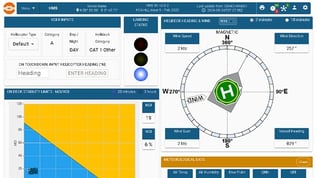
The Helideck Monitoring System uses the installed sensors and presents what CAP 437 requires.
Expands without a rebuild
Add sensors, inputs and outputs as requirements change, without starting again.
One system, three configurations
A MetOcean system, a weather monitoring system and an Environmental Monitoring System are the same system in different configurations. Which one applies is decided by what has to be measured, not by what it is called.
Meteorological
Wind, air temperature, humidity, pressure, visibility, cloud base, precipitation and solar radiation, measured at the asset. Most often asked for as a weather station.
Oceanographic
Waves, currents through the water column, tide and water temperature: the conditions that bear on mooring integrity, riser management and marine operations.
Combined
Both, delivered as one system: one display, one data record and one interface to the rest of the asset. Most offshore scopes end up here.
The name arrives with the specification
These are not our house styles. Each has reached us inside a specification our customer had themselves been handed. If the system you are specifying goes by one of these names, this is the page you want.
Been handed a name that is not on the list? Send us the specification and we will tell you which configuration it describes and which parameters it asks for.
Atmospheric monitoring
Meteorological sensor suite
The atmospheric parameters that govern day-to-day operations and emergency decisions. Sensors are selected and positioned to meet class society and operator requirements, with redundancy built in from the outset.
Wind speed and direction
Deck structures, flare booms and the superstructure distort the local flow, so sensors are positioned to minimise it, with correction where needed. Mechanical and ultrasonic types, ATEX options, LIDAR wind profiling, true and relative wind, gust alarms.
Air temperature and humidity
High-accuracy sensors in ventilated radiation shields, with ATEX versions for hazardous areas. Dew point, wet-bulb temperature and heat stress index for personnel safety.
Barometric pressure
Barometers optimised for offshore mounting, with pressure chokes against wind-induced artefacts. Pressure tendency for approaching weather, and station and sea-level pressure.
Visibility and cloud base
Forward-scatter visibility sensors with ranges up to 100 km, telling fog, haze and precipitation apart, and cloud-base LIDAR compliant with CAP 437 for helideck safety.
Rain and solar
Precipitation rate and accumulation, present-weather classification and solar irradiance, added within the EMS package for reporting and squall detection.
Weather radar
Furuno marine weather radar, integrated for EMS and squall alerting, gives a real-time picture of weather at range and is the foundation for squall warning.
Subsea and water column
Oceanographic sensor systems
What happens in the water column around an FPSO, from surface currents to near-bed conditions, bears on mooring integrity, riser management, anchor handling and subsea planning. We supply the instruments and integrate them into the wider EMS.
Acoustic Doppler current profilers (ADCP)
Current speed and direction through the full water column, from near-surface to near-bottom: the backbone of an FPSO oceanographic system.
- Full-depth profiling at configurable bin sizes
- Wave height and direction on selected systems
- Hull-mounted, mooring-mounted and lander configurations
- Deepwater deployments in excess of 1,000 m
Acoustic current meters (ACM)
Single-point meters at specific depths for precise measurements near structures, in riser environments and for drag anchor assessments.
- Point measurement at any target depth
- Low-drag mooring designs for deepwater use
- Internal data logging, serviced with LARS
Motion monitoring
Motion sensors
Vessel motion underpins helideck safety assessments, dynamic positioning support and operational decisions. Motion sensors feed the same data environment as every other EMS input.
WISE AIM motion sensor
Our own motion sensor, built on a multi-IMU architecture with high-fidelity accelerometers and tilt sensors, and embedded across many of our offshore systems. Six degrees of freedom, helideck motion to CAP 437, structural and vessel motion.
IMUs and inclinometers
Industry-standard inertial measurement units and inclinometers for dynamic positioning support, helideck landing aids and tilt monitoring for structural assessments.
Deployment systems
LARS: Launch and Recovery Systems
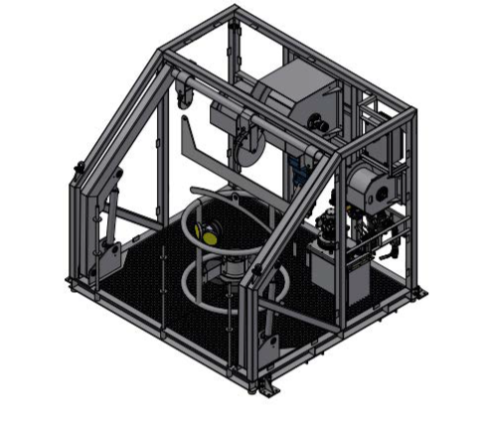
Deploying and recovering oceanographic instruments from an operating FPSO is a real safety and logistics challenge. Our Launch and Recovery Systems are engineered for it, taking ADCPs, ACMs and other instruments safely overboard and back.
- AISI 316 stainless steel for corrosive marine environments
- Designed to DNV lifting appliance standards and ATEX directives
- Ex (ATEX Zone 2) and non-Ex configurations of every model
- Hydraulic winches for controlled deployment to depth
- Hydraulic fail-safe systems and crash frames protect people and equipment
- Less downtime for sensor cleaning and maintenance
LARS Lite
Compact deployment system
Lightweight and space-efficient for smaller vessels and tight decks. Suits nearshore and shallow-water deployments.
LARS 2.0
Versatile offshore system
Robust performance in harsh offshore environments. The standard choice for FPSOs, and fully ATEX-capable.
LARS 2.0 (1500)
High-capacity system
Greater lifting capacity for deepwater operations with heavier payloads or greater depths.
Data management and integration
Turning sensor data into operational information
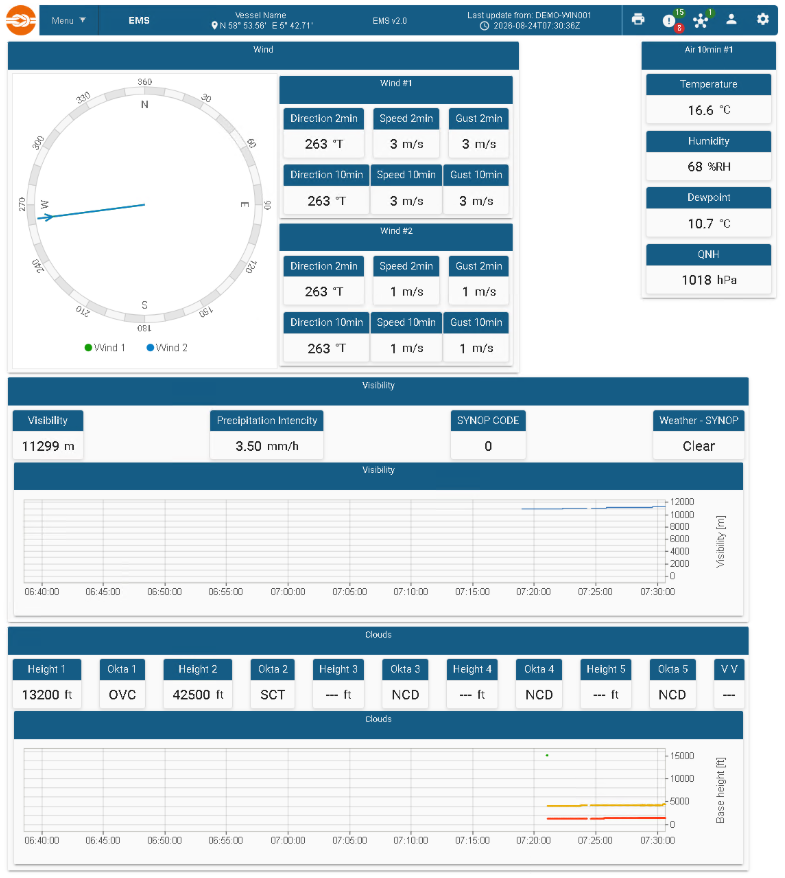
Sensors alone do not improve decisions. The value lies in how data is collected, displayed and shared. Our own DADAS software sits at the heart of the EMS, handling acquisition from every sensor, display configuration, historical analytics and data sharing between local and remote users.
Configurable displays
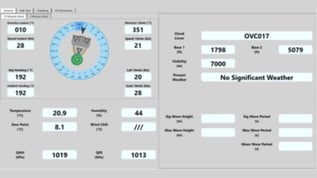
Real-time readouts, trend charts and historical analytics, laid out for the bridge, control room or OIM workstation.
Local and remote access
Data reaches users over data lines, email, web pages and satellite links to shore-based teams, enabling 24/7 expert support.
Operational limit monitoring
Parameters compared continuously against thresholds for helicopter operations, crane lifts, marine transfers, diving and more.
Long-term data logging
Continuous archiving for regulatory reporting, incident investigation, metocean baseline studies and site-specific design criteria.
System integration
EMS data feeds the Helideck, Mooring Line, Structural Stress and Current Profiler systems, with no duplication or gaps.
METAR, SYNOP and environmental reports
Automatic METAR and SYNOP reports, alongside environmental compliance outputs for regulatory reporting.

Beyond the asset with Orbalux
Our cloud platform for environmental and operational data takes EMS data online: live dashboards, history for engineering and reporting, and controlled sharing with partners, over encrypted outbound-only connections. About Orbalux →
Why WISE Group
A complete system, built around your operation
When weather, sea state, currents, motion and squall alerts flow into one platform, operators see one coherent, real-time picture of the site. We build that picture, and we stay with you to keep it accurate for the life of the asset.
One integrated system
Meteorological and oceanographic sensors, motion, LARS, squall warning and DADAS, designed to work together from the outset. No fragmented feeds.
Tailored to your operation
Displays, thresholds and alert logic configured to how your team works, on a deepwater FPSO, a drillship, a fixed platform or a renewables operation.
Our own technology
The WISE AIM motion sensor and the DADAS platform are WISE Group developments, which gives us deeper integration and product knowledge.
Connects to your wider systems
Integration with ICSS, berthing aids, excursion monitoring, vessel management and environmental reporting outputs.
Offshore-proven hardware
Each sensor chosen for how it performs where it will operate: ATEX hazardous areas, tropical deepwater, corrosive marine atmospheres.
Here for the long term
Lifecycle services from commissioning to end of field life: calibration, preventive maintenance, offshore service engineers and fast-track spares.
Options within a MetOcean scope
Some parts of a MetOcean delivery are options within the system rather than systems bought on their own.
Option
Squall warning
Detection and warning of approaching squalls, where the operation needs advance notice of a rapid change in conditions.
Option
MET Translator Display
Presents measured meteorological data in the form the people using it need, rather than as raw instrument output.
Where to next
The Environmental Monitoring System sits in MetOcean and weather monitoring, one of the monitoring areas WISE Group delivers.
Related systems: Weather Stations · Squall Warning System · Forecasting Weather Systems · Helideck Monitoring System
Also useful: All monitoring systems · Sensors and instruments · DADAS software · Service and support
Useful to include
- The asset and its location
- The specification, whatever it calls the system
- The operations with weather or sea state limits
- Systems the EMS has to connect to
What happens next
We read the specification and confirm which configuration it describes.
We match sensors and siting to the parameters and operations.
You get a scope covering sensors, software, installation and service.

Delivered
Dogger Bank offshore wind farms
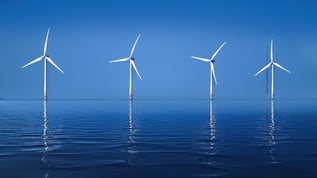
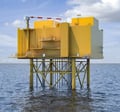
Environmental Monitoring Systems for the first two wind farms in the Dogger Bank area, on offshore substations built by Aibel, providing real-time meteorological and oceanographic data. Read the story →
Get in touch
Send us the specification or tell us about the operation: which conditions set its limits, and who needs to see them. We will come back with the configuration, the sensors and where they should go. You can also contact us directly.