





Monitoring systems › Environmental and Wildlife Monitoring › Camera-based bird and bat monitoring
Environmental and wildlife monitoring
Camera-based bird and bat monitoring
AI detection and species classification from Spoor, with the system around it built, installed and supported by WISE Group.
Cameras watch a defined area and AI detects, tracks and classifies what passes through it: birds and bats, day and night. Where a consent condition asks which species are present and what they are doing, classification is what answers it.
WISE Group works with Spoor, a Norwegian climate-tech company whose platform produces continuous, species-level ecological data for impact assessment and compliance reporting. We supply and support everything that detection needs in order to keep working where it is installed.
What it produces
A continuous record
The output is a continuous record rather than a sample: what was detected, when, and (where the platform can classify it) what species it was. That record is what an impact assessment, a permitting authority or a compliance report draws on.
Day and night
Detection runs day and night. After dark the cameras depend on infrared illumination, which WISE Group supplies and controls as part of the system.
Our part
What WISE Group supplies
The detection and classification software comes from Spoor. What WISE Group brings is everything that has to work around it, offshore, for years.
Cameras and compute
The cameras and the hardware the detection software runs on, specified for the site and for the species named in the condition. One option is the WISE 8K Marine Camera, built for long-range detail offshore.
Infrared illumination
Supplied and controlled, so detection continues after dark.
Power, enclosures and communications
Equipment built to survive an offshore substation or a turbine, with power and data paths that hold up through a winter.
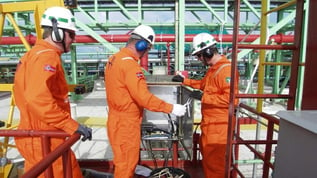
Installation and commissioning
Access, lifting, cabling and the documentation the site needs in order to accept the system.
Service for the life of the consent
Spares, verification and support, so the record keeps being produced for as long as the condition runs.
Operation
Infrared lighting and telemetry in Orbalux
The detection software stays with Spoor. The installation around it is monitored and operated from the same place as the rest of the asset’s monitoring.
Infrared lighting
Cameras need light to work after dark. WISE Group supplies the infrared lighting and controls it, so illumination follows the operating need rather than running continuously.
Telemetry and control
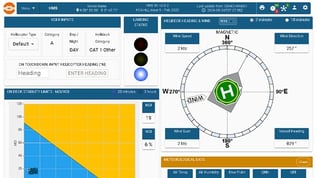
Telemetry from the deployed systems, and control of that lighting, are integrated into Orbalux, WISE Group’s own platform.
Where radar fits
Cameras identify what is in frame. Radar covers a volume of airspace and tracks movement through it, including in darkness and weather that defeats optical detection. The two answer different halves of the same question, and some consent conditions are best met by using both.
Working with Spoor
On some projects Spoor present the complete solution and WISE Group deliver the system behind it; on others WISE Group lead the project and bring Spoor’s detection into a wider monitoring scope. Which arrangement applies is usually decided by who the site is already talking to.
Where to next
Camera-based monitoring sits in Environmental and Wildlife Monitoring, one of six monitoring areas WISE Group delivers.
In this area: Environmental and Wildlife Monitoring · Radar-based bird and bat monitoring · Air quality monitoring
Related systems: Visual monitoring (CCTV) · MetOcean and weather monitoring
Also useful: Orbalux · Spoor · Service and support
Useful to include
- The consent conditions you are working to
- The asset the equipment has to sit on
- When the site needs to be monitoring
What happens next
We confirm what the condition requires the monitoring to show.
We agree the camera setup with Spoor and define the system around it.
You get a scope for supply, installation and service.
Talk to us about a site
Tell us the consent conditions, the asset and the timeline, and we will come back with what a system would contain and what we would need from the detection partner.
You can also contact us directly.