

Monitoring systems › Structural and Motion Monitoring
Structural and motion monitoring
Structural and Motion Monitoring
Measured evidence of what a structure or vessel is actually experiencing: vibration, motion, tilt, strain and settlement, recorded continuously and read against the loads that caused them.
Design calculations say how an asset should behave. Monitoring shows how it does behave. WISE Group supplies systems that measure structural response and motion offshore, built on our own AIM measurement technology and configured to the asset, the operator’s specification and the rules the asset is approved under.
Is the asset still fit?
Every system in this area answers that question for the people responsible for an asset: is it behaving as it should, and is it safe to keep operating? The answer comes from the asset itself, from how it moves, vibrates, tilts and strains under the wind, waves and current it actually sees.
Why this area is different
No single standard sets the scope. Class rules, national regulation and the owner’s own specification all bear on it, but what has to be measured follows from the asset and from the decision the data has to support: a personnel transfer, an inspection plan, a life extension case.
The systems
What are you monitoring?
Start from the asset. Each system is configured for the structure or vessel it is installed on, and each has its own page with what it measures and how it is built.
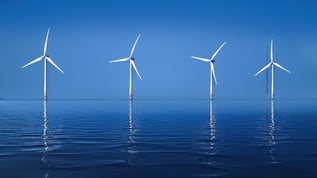
Offshore wind
A fixed or floating wind structure
Vibration, displacement and modal behaviour across the structure, trended from commissioning, to support maintenance decisions and digital twin models.
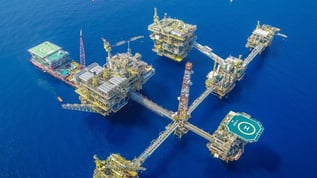
Oil and gas
An ageing structure facing life extension
A long, continuous record of how the structure responds to the loads it sees, with settlement from GNSS where it matters, for the integrity engineers making the case.
Offshore wind
The foundation of a turbine or substation
Scour, corrosion, leak detection, water level and strain in one system, built to the project specification, the national regulation and the owner’s own standards.
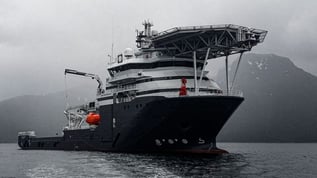
Vessels
A vessel’s motion during transfers and lifts
Six degrees of freedom and heave rate at the landing point, with guidance the Captain can act on, so the decision to transfer rests on vessel motion rather than wave height alone.
Vessels
Stress and strain on a hull
Strain gauges combined with motion and environmental data, so the stress on a hull is tracked and analysed over time.
Not sure which fits?
Several at once
Many assets need more than one of these, and the systems can share sensors and data. Tell us about the asset and what the data has to support, and we will say what it needs.
What the systems have in common
Each system is configured separately for its asset, but they share the same measurement technology, the same approach to integration and the same project and service team.
The measurement
Advanced Inertial Measurement (AIM)
Our AIM technology combines multiple MEMS-based accelerometers and precision tilt sensors in one unit. On a structure, AIM sensors are deployed as a set: a main unit with satellite units spread across it, so the system can separate sway in each direction from torsion and check the units against each other.
Integration
Built on what is already there
Where a MetOcean or helideck monitoring system is already installed, structural and motion sensors can join it. The wave, wind and current data it records becomes the load record the response is read against, and instruments are shared rather than duplicated.
Delivery
A record that stays continuous
Structural and motion data is only as useful as its continuity. Gaps in the data are gaps in the evidence, so the delivery does not end at handover.
Specification
We start from the decision the data has to support and the rules the asset is approved under, and agree what has to be measured before anything is priced.
Delivery
Engineering, supply, installation and commissioning, with the documentation the asset needs in order to accept the system.
Service
On-site system verification, spares and support from Norway and the UK, with sensor calibration arranged with the manufacturer or a certified laboratory, so the baseline and the history survive when sensors and servers are replaced.
Where to next
Structural and Motion Monitoring is one of six monitoring areas WISE Group delivers.
In this area: Structural Health Monitoring (offshore wind) · Life Extension Monitoring (oil and gas) · Foundation Monitoring System · Vessel Motion Monitoring · Hull Stress Monitoring
Related systems: MetOcean and weather monitoring · Helideck Monitoring · Excursion monitoring
Also useful: AIM technology · DADAS · Offshore wind · Oil and gas · Service and support
Useful to include
- The asset, and whether it is fixed, floating or a vessel
- What the data has to support: operations, inspection planning or a life extension case
- What is already installed: weather, wave, helideck or structural systems
What happens next
We confirm what has to be measured, and why.
We define the sensors, their positions and the software setup.
You get a scope for supply, installation and service.
Discuss a monitoring scope
Tell us about the asset, what you need to know about it and who has to accept the result, and we will come back on which system fits and how it would be configured.
You can also contact us directly.