

Monitoring systems › Helideck and Aviation Monitoring › CAP 437
Standard · United Kingdom · Used internationally
CAP 437: Standards for offshore helicopter landing areas
The UK Civil Aviation Authority’s standard for the design, operation and safety of offshore helidecks, and the international benchmark that classification societies and other national regulations build on.
Overview
CAP 437, published by the UK Civil Aviation Authority (CAA), defines the standards for the design, operation and safety of offshore helicopter landing areas.
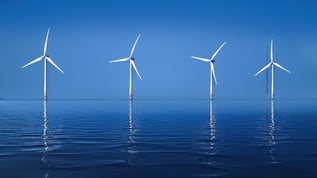
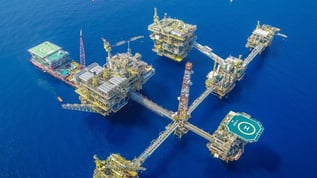
It covers helideck layout, lighting, obstacle clearance, meteorological instrumentation and, where applicable, Helideck Monitoring Systems (HMS). These standards apply to all UK-registered helicopters and offshore installations, including oil and gas platforms, floating production units and offshore wind substations.
On the UK Continental Shelf (UKCS), compliance with CAP 437 is recognised by the Health & Safety Executive (HSE) as evidence of conformity with offshore safety legislation.
Scope and application
CAP 437 applies to both fixed and mobile offshore installations. Fixed helidecks, such as those on production platforms or substations, are evaluated primarily against design, lighting and meteorological requirements.
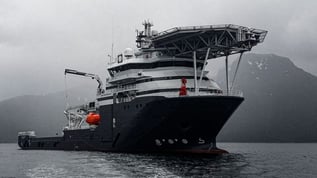
For moving helidecks, such as those on semi-submersible rigs, FPSOs and support vessels, CAP 437 also addresses motion and environmental monitoring. In these cases, the Helideck Certification Agency (HCA) provides detailed implementation guidance in its document Standard Measuring Equipment for Helideck Monitoring Systems and Weather Data, currently Revision 9c.
Fixed vs moving helidecks
Both categories fall under CAP 437. The difference lies in their operational environment.
Fixed helidecks
Remain stable relative to the sea surface, so they do not require motion monitoring. Meteorological measurements alone are sufficient.
Moving helidecks
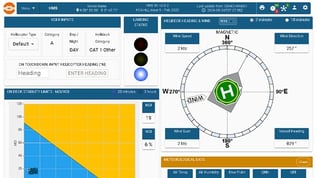
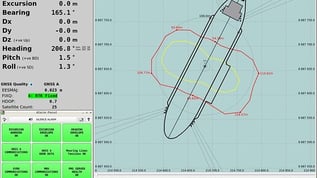
Experience pitch, roll and vertical movement that directly affect helicopter performance. They must be equipped with a certified HMS that measures and reports deck motion and weather data in real time.
Relationship with ICAO standards
CAP 437 builds on ICAO Annex 14, Volume II (Heliports), expanding its principles for offshore conditions. It adds guidance on helideck geometry, lighting, obstacle protection and environmental monitoring.
International recognition
Although developed in the UK, CAP 437 has become the international benchmark for offshore helicopter landing areas. Classification societies, including ABS, DNV, Lloyd’s Register and Bureau Veritas, typically specify CAP 437 as the minimum standard for helidecks on vessels and floating units when no local aviation regulation applies.
Some countries have their own frameworks derived from CAP 437 principles, aligned with its intent and structure:
Norway: BSL D 5-1
Together with relevant parts of BSL G 7-1, certified by CAA Norway. Official text →
Brazil: NORMAM-223
Formerly NORMAM-27, applied through Brazil’s maritime and aviation authorities. Official text →
This broad adoption has established CAP 437 as the de facto global best practice for helideck safety, meteorological accuracy and monitoring performance.
Meteorological and monitoring requirements
A key element of CAP 437 is reliable meteorological data to support flight operations. Each helideck should supply accurate, locally measured information on:
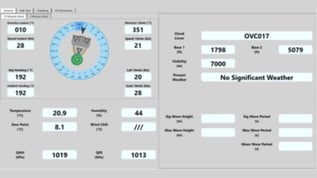
For moving helidecks, this data is integrated within the HMS, which combines the meteorological readings with deck-motion parameters:
This gives pilots and offshore crews a consistent, real-time picture of landing conditions.
Current edition and HCA implementation
The latest issue, CAP 437 Edition 9 Amendment 1 (January 2026), introduces a range of minor updates and a major operational enhancement through a new appendix: the Master Minimum Helideck Equipment List (MMHEL).
Master Minimum Helideck Equipment List (MMHEL)
Structured guidance for managing the temporary unserviceability of safety-critical helideck equipment, so operators can keep operating safely under controlled limitations.
“Rev 9b” and “Rev 9c” refer to the HCA’s implementation standards, not revisions of CAP 437 itself. They explain how CAP 437 Edition 9 is applied to moving helidecks in practice. See HCA Rev 9c (current) and Rev 9b.
How WISE Group supports CAP 437
Helideck systems built to Edition 9
We design, deliver and support Helideck Monitoring Systems and meteorological packages that comply with CAP 437 Edition 9 and HCA Revisions 9b and 9c, deployed across oil and gas, renewables and marine.
- Integration of HMS and weather systems
- Calibration, verification and system upgrades
- Operator training and documentation
- Support for class-society approval and HCA audits
Helideck standards
Related standards
CAP 437
The UK CAA standard for offshore helidecks, and the international benchmark.
You are hereBSL D 5-1
The Norwegian regulation for the use of offshore helidecks.
Read the overview →BrazilNORMAM-223
The Brazilian Maritime Authority standard for helidecks in Brazilian waters.
Read the overview →GlobalHCA Rev 9c
The HCA standard for HMS and weather data on moving helidecks.
Read the overview →Questions about CAP 437?
Whether you are specifying a new helideck, upgrading an HMS to Edition 9, or preparing for an HCA audit, our team can tell you what the standard means for your installation.
Useful to include
- The asset, and whether the helideck is fixed or moving
- The regulation it is approved under
- Any HMS already installed
Read CAP 437 at the source
The current edition and amendments are published by the UK Civil Aviation Authority.
Prefer to talk it through?
Our helideck team can walk you through what Edition 9 means for an existing or planned installation.
Get in touch
Tell us about the helideck and what you need to know. You can also contact us directly.