






Monitoring systems › Structural and Motion Monitoring › Structural Health Monitoring System
Structural and motion monitoring
Structural Health Monitoring System (SHMS)
Precision monitoring for structural integrity in offshore environments.
The WISE Group Structural Health Monitoring System (SHMS) monitors structural integrity on offshore wind assets, fixed and floating. Built on our AIM technology, it provides the data to maintain safety, optimise maintenance strategies and extend asset life.
Monitor, predict, protect
Offshore, precise structural monitoring is essential. The SHMS captures high-resolution vibration, displacement and angular data, supporting predictive maintenance and fatigue assessment. Identifying structural issues at the earliest stage helps operators avoid costly downtime and interventions.
The SHMS continuously measures
- Vibrations and accelerations (X, Y and Z axes)
- Structural displacement and deformation
- Modal behaviour: sway, torsion and resonance frequencies
- Long-term structural trends and fatigue progression
- Structural responses to environmental loads
Typical results
What the data looks like
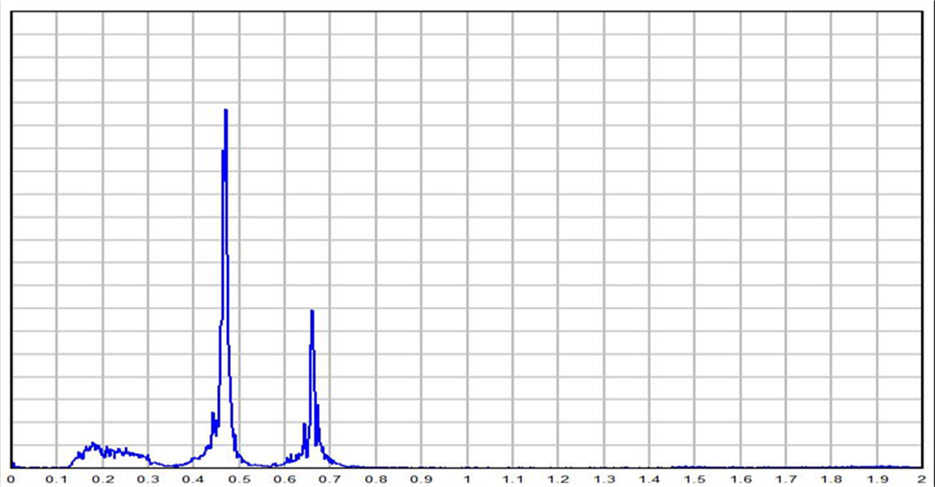
Modal response
The structure’s resonance frequencies, identified from the measured vibration.
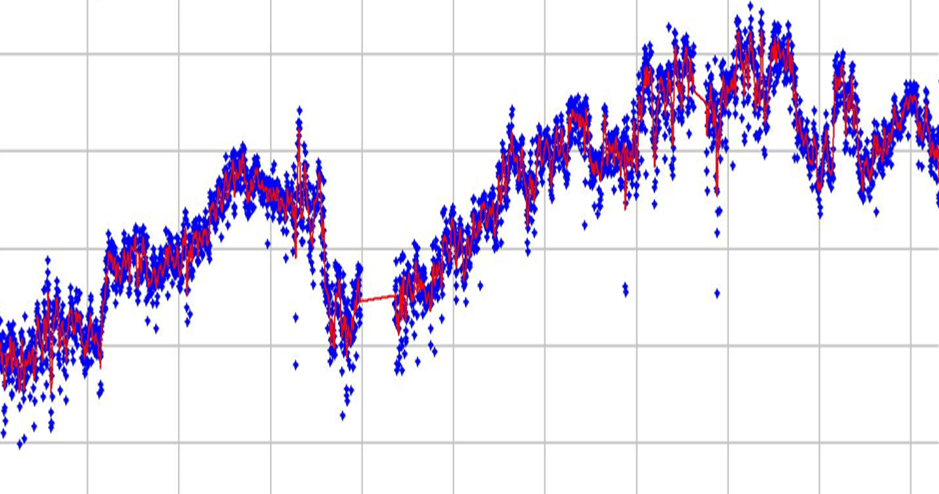
Modal results over time
The same results trended over time, so long-term changes in structural behaviour show up.
The measurement
Advanced Inertial Measurement (AIM) technology
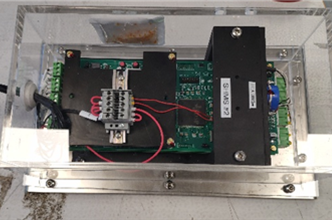
Our AIM technology is the backbone of the SHMS, combining multiple MEMS-based accelerometers and precision tilt sensors in one unit. AIM sensors are positioned across the structural elements to give accurate measurements in extreme offshore conditions, in stainless-steel IP67-rated housings built for long-term data collection.
AIM sensor capabilities
- High-precision six degrees of freedom (6DOF) measurement
- Noise reduction through grouped accelerometer configurations
- Real-time temperature calibration for measurement accuracy
- Configurable data acquisition, sampling up to 1 kHz, with RS485, RS232, Ethernet and analogue connectivity
Data processing
Data processing for digital twin integration
WISE Group uses non-real-time (NRT) methods to calculate structural displacement from acceleration data. The approach adds a short processing delay, but gives the accuracy detailed structural analysis, health assessment and digital twin modelling need.
For a digital twin strategy, the SHMS provides
- Detailed structural deformation data
- Fatigue analysis and lifecycle assessments
- Real-time integrity monitoring dashboards
- API-based integration
Flexible system architecture
Every SHMS is configured for the application. Systems typically use multiple AIM units in a scalable matrix, for full structural coverage and redundancy, and can add complementary sensors such as optical strain gauges for stress measurement or wave radar for environmental monitoring.
A typical configuration includes
- Multiple AIM units, with satellite sensor options
- Optical strain gauges for fatigue tracking
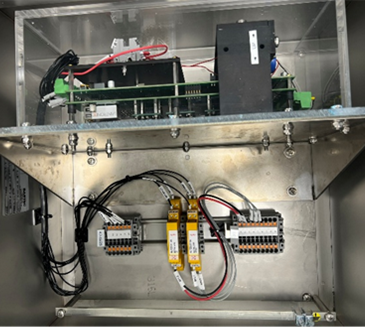
- Stainless steel junction boxes with surge protection
- Rack-mounted industrial servers and software
- Remote data access and real-time visualisation
Integration option
Bolt monitoring
The SHMS can incorporate wireless bolt monitoring sensors that continuously track bolt preload and integrity. With battery lives of up to 20 years and IP68-rated housings, they reduce the need for manual inspection, and their data feeds into the same SHMS framework.
Key benefits
Safety
Early detection of structural anomalies reduces operational risk.
Asset life
Informed maintenance and fatigue management decisions extend service life.
Uptime
Proactive monitoring helps prevent costly downtime.
Durability
Offshore-grade materials for consistent performance in extreme conditions.
Where to next
The Structural Health Monitoring System sits in Structural and Motion Monitoring, one of six monitoring areas WISE Group delivers.
In this area: Foundation Monitoring System · Life Extension Monitoring System (oil and gas) · Vessel Motion Monitoring · Hull Stress Monitoring
Related systems: MetOcean and weather monitoring · Excursion monitoring · Helideck Monitoring
Also useful: The WISE AIM motion sensor · AIM technology · Service and support
Useful to include
- The structure: fixed or floating, and its design life
- What has to be measured, and where
- Any strain, motion or bolt monitoring already installed
What happens next
We confirm the measurements and the sensor layout.
We define the AIM configuration, data processing and integration.
You get a scope for supply, installation and service.
Get in touch
Tell us about the structure and what you need to know about it, and we will come back on how an SHMS would be configured. Ask here for the SHMS system overview and the AIM sensor datasheet.
You can also contact us directly.