


Monitoring systems › Structural and Motion Monitoring › Life Extension Monitoring System

Structural and motion monitoring

Life Extension Monitoring System

Measured evidence for keeping an ageing structure in service.

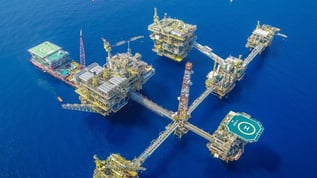
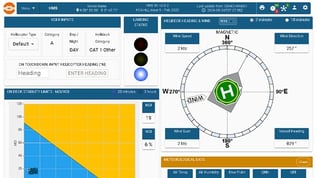
Offshore assets are regularly asked to run beyond the life they were designed for. The WISE Group Life Extension Monitoring System measures how the structure is actually responding, so the case for extending its life rests on recorded behaviour rather than on design assumptions alone. It combines several AIM sensors placed across the structure, adds GNSS where settlement matters, and runs on DADAS. Where a MetOcean or helideck monitoring system is already in place, the structural sensors join it and read the response against the sea state it already records.

What the structure is doing, not what it was designed to do

A life extension case is made by the operator’s integrity engineers and accepted by the authority or class society. In Norway, using an installation beyond its design life needs consent from Havtil, and the structural assessment follows standards such as NORSOK N-006 and ISO 19901-9.

What the engineers need from a monitoring system is a long, continuous record of how the structure responds to the loads it actually sees, so they can compare it with the design basis and plan inspection where it matters.

The system continuously measures

  • Vibrations and accelerations (X, Y and Z axes)
  • Tilt, structural displacement and deformation
  • Modal behaviour: sway in each direction, torsion, and how the natural frequencies change
  • Structural response to wind, wave and current loads
  • Settlement over time, from GNSS, where subsidence is a concern
  • Long-term trends, logged for the remaining life of the asset

Typical results

What the data looks like

Why the natural frequencies matter

A structure’s natural frequencies depend on its stiffness and its mass. If a member or joint loses stiffness, the frequencies drop. A change against the commissioning baseline tells the integrity team where to look, and a return to the baseline after a repair confirms the fix.

Changes in mass, from added equipment or marine growth, move the frequencies too. That is why the trends are read alongside the load record and the asset’s own history, not on their own.
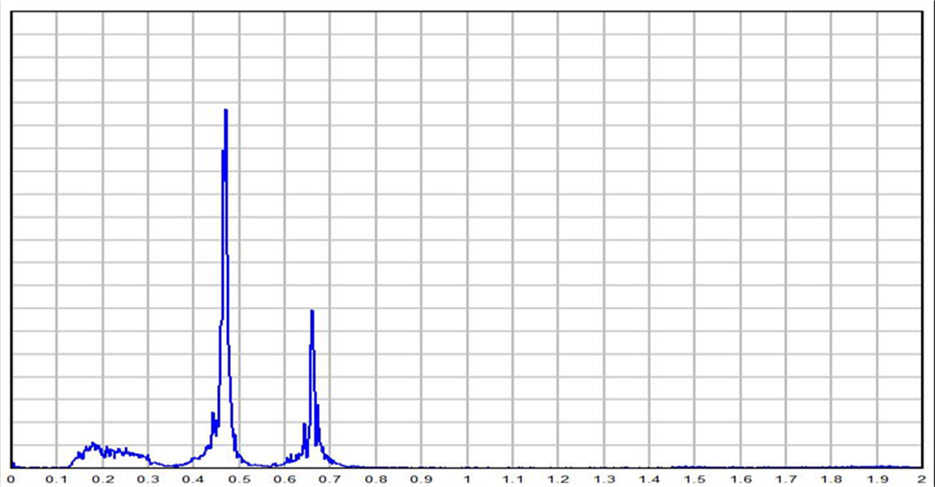
Typical modal response plot from structural monitoring

Modal response

The structure’s natural frequencies, identified from the measured vibration.
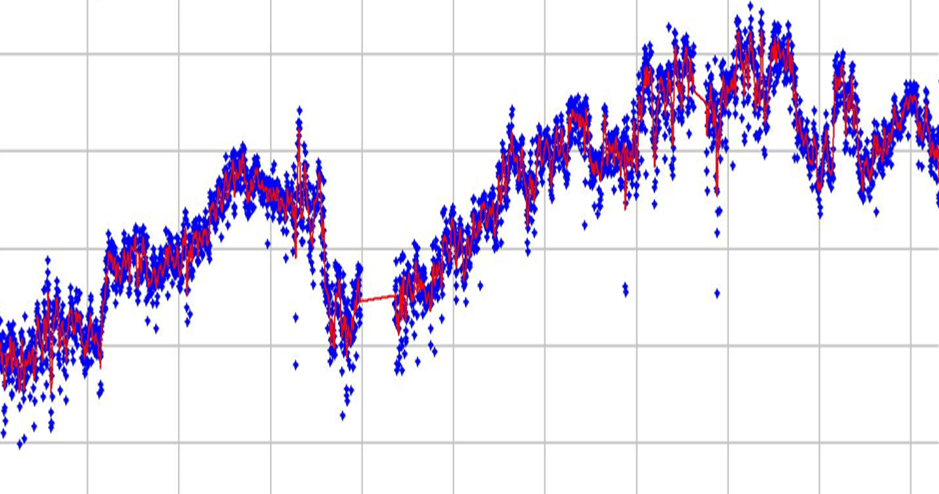
Modal results from structural monitoring trended over time

Modal results over time

The same results trended over time, so a change in structural behaviour shows up against the baseline.

The measurement

Advanced Inertial Measurement (AIM) technology

Our AIM technology combines multiple MEMS-based accelerometers and precision tilt sensors in one unit. AIM sensors are deployed as a set: a main unit that logs the data, with satellite units placed across the structure. One sensor measures motion at one point; several, spaced apart, let the system separate sway in each direction from torsion and check the units against each other. All are in stainless-steel IP67-rated housings built for long-term data collection.

AIM sensor capabilities

  • High-precision six degrees of freedom (6DOF) measurement
  • Noise reduction through grouped accelerometer configurations
  • Real-time temperature compensation for measurement accuracy
  • Configurable data acquisition, with RS485, RS232, Ethernet and analogue connectivity
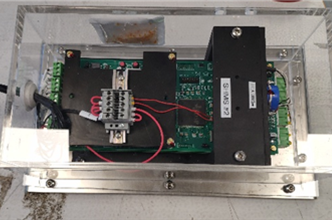
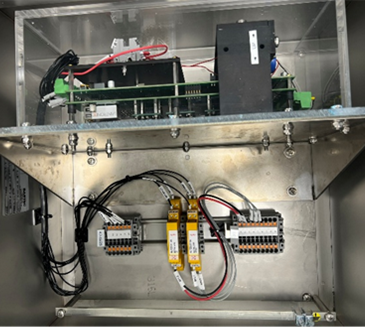
A WISE AIM sensor unit, opened to show the electronicsA stainless steel junction box for structural monitoring

Data processing

Data your integrity engineers can use

WISE Group uses non-real-time (NRT) methods to calculate structural displacement from acceleration data. The approach adds a short processing delay, but gives the accuracy that structural analysis and integrity assessment need.

The output is built to feed the structural model and assessments the operator or its consultant already runs, digital twins included, rather than to replace them.

For a life extension assessment, the system provides

  • A baseline of the natural frequencies, measured at commissioning and tracked from then on
  • Structural response and deformation data, read against wave height and direction
  • Time-history files with automatic flags for gaps and suspect data
  • Input to fatigue and remaining-life assessments
  • Trends that help target inspection, and periodic analysis reports if required
  • Real-time dashboards in DADAS
  • Export to the operator’s own systems, such as a PI historian

How an asset is instrumented

Every system is configured for the asset, and most build on what is already there. The system can be delivered as an expansion of an existing Environmental or Helideck Monitoring System: the structural and settlement software runs on the same DADAS server, and the wave, current and wind data it already collects become the load record the response is read against.

A configuration builds up in steps

Core

Structural response

  • A main AIM unit with satellite units spread across the structure
  • Stainless steel junction boxes with surge protection
  • Rack-mounted industrial servers running DADAS, with remote access and real-time displays

Add

Load record and settlement

  • Wave and current sensors for the sea state the structure responds to, or the data from a system already installed
  • A GNSS reference station for settlement and subsidence

Extend

Direct measurement and integration

  • Optical strain gauges where stress has to be measured directly
  • Wireless bolt monitoring
  • Export to the operator’s systems, such as a PI historian

Subsidence

GNSS settlement measurement

A GNSS reference station with a choke-ring antenna measures the structure’s height continuously. Settlement shows up as a trend in the same system, alongside the structural response, rather than only at the next survey.

Integration option

Bolt monitoring

Wireless bolt monitoring sensors can track bolt preload and integrity continuously. In IP68-rated housings, they reduce the need for manual inspection, and their data feeds into the same system.

What it gives the operator

A basis for continued operation

A measured record that supports the life extension case and the consent application, alongside inspection and analysis.

Inspection where it matters

Trends show where the structure is changing, so inspection effort, underwater time included, goes where it is needed.

Early warning

A change in structural behaviour shows up early, while there is still time to act.

Builds on what is there

Uses the sea-state data from an existing MetOcean or helideck system and runs on DADAS.

Long-term support

Built to run for the remaining life of the asset

Life extension monitoring runs for years, often decades, and the record is only as useful as its continuity. Sensors and servers will be replaced along the way, and the value lies in keeping the baseline and the history intact through those changes.

  • More than 30 years in offshore monitoring
  • The AIM sensor and the DADAS software developed in-house
  • Legacy software still supported for installed systems
  • On-site system verification, service and spares from Norway and the UK

Useful to include

  • The structure and its original design life
  • How far the life is to be extended, and who has to accept the case
  • When the design life runs out, and when the case has to be submitted
  • What is already installed: weather, wave or helideck systems, and any structural or subsidence data

What happens next

1

We confirm the measurements and the sensor layout.

2

We define the AIM configuration, data processing and integration.

3

You get a scope for supply, installation and service.

Get in touch

Tell us about the structure and the life extension it faces, and we will come back on how the system would be configured. Ask here for the AIM sensor datasheet.

You can also contact us directly.