

Industries › Oil and gas
Industries
Oil and gas
Monitoring for platforms, FPSOs and drilling rigs, from helideck approvals to position and mooring.
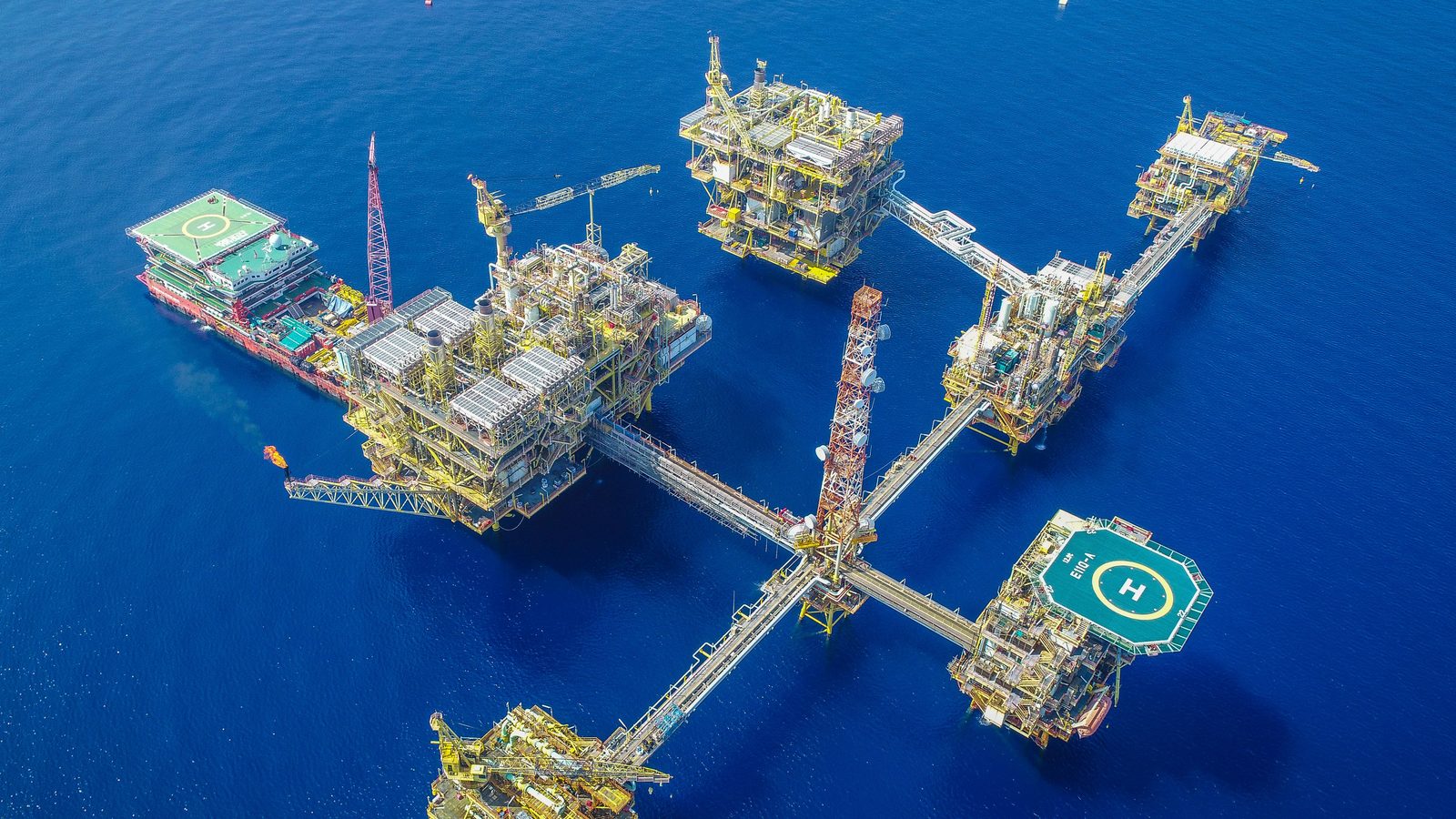
On a producing asset the monitoring system is rarely the point of the day. It is what decides whether the day happens: whether the helicopter lands, whether the crane lifts, whether the dive goes ahead, whether the offloading window is still open.
WISE Group engineers, delivers and supports that scope as one system rather than as separate instrument packages, and configures it to the regulation the asset is actually approved under.
What has to be measured here
Most of what is measured on a platform or an FPSO exists to authorise an operation, and to be able to show afterwards what the conditions were when the decision was taken.
Helideck conditions
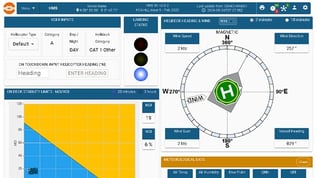
Wind, visibility, cloud base, pressure and temperature, and on a moving deck pitch, roll and significant heave rate, presented the way the approving regulation requires.
Weather and sea state
For lifting, diving, boat transfer and offloading.
Position and mooring
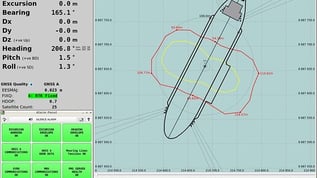
On floating production, so that excursions can be seen against the limits set for the field.
Approach speed and distance
When a tanker comes alongside, presented to the people bringing the vessel in.
Structural response and motion
On the structure and its critical components.
Camera coverage
Covering the helideck, the cranes and the areas people cannot safely stand.
Telemetry from remote and unmanned installations
Where the data has to come back to a manned control room.
Typical systems on these assets
These are the areas an oil and gas scope usually draws on. Most deliveries combine more than one of them into a single system.
Helideck and aviation monitoring
The Helideck Monitoring System reports and records the conditions a helicopter has to land in, configured to the standard the asset is approved under.
Explore →
MetOcean and weather monitoring
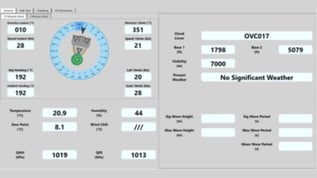
Wind, wave, current, visibility and air and sea conditions, engineered and presented as one Environmental Monitoring System.
Explore →
Position and mooring monitoring
Excursion monitoring on floating production, and the Tanker Berthing Aid System when a tanker comes alongside, both read against the limits set for the field.
Explore →
Life extension monitoring
How the structure and its critical components are responding, and how that response changes over the life of the asset.
Explore →
How WISE Group works on these assets
Oil and gas is where WISE Group started, and after more than 30 years offshore the work is as much about approvals, interfaces and documentation as it is about instruments. Helideck monitoring is the clearest case. The software carries a separate code base for each regulatory regime, so an installation is configured to the standard that applies to it rather than to all of them at once: CAP 437 on the UK Continental Shelf, BSL D 5-1 in Norway, NORMAM-223 in Brazil. Our helideck software is delivered to CAP 437 Edition 9 and to HCA Rev 9c, the pairing often referred to as CAP 437 9c.
On new build and major modification projects WISE Group is often the monitoring supplier inside a larger package, working to a telecom system integrator, an EPC contractor or a yard. That puts weight on interface definition, documentation, factory acceptance testing and delivery coordination as much as on the instruments themselves.
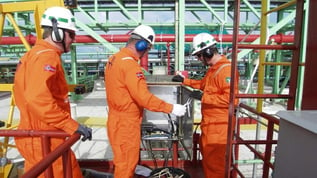
Afterwards the same team keeps the system running: spares, service visits, and on-site system verification, in which installed sensors are compared against recently calibrated reference sensors brought to site. Calibration itself is a laboratory activity, and we manage those returns on your behalf with the manufacturer or a certified laboratory.
Scoping
What we will need to know
Most enquiries arrive as a specification rather than a blank sheet. These are the points that decide the scope.
- Which regulation the helideck is approved under, and which edition of it
- Whether the deck is fixed or moving
- Which operations the weather data has to authorise, and the limits set against them
- Whether the asset is moored, and what the excursion limits are
- Which control and reporting systems the data has to reach, and in what format
- Area classification, and any Ex requirements
Tell us those and we will come back with a system description you can put into a specification.
Where to next
Oil and gas is one of four asset types we work on most. Every system named on this page is described in full in the Systems section.
In this area: Industries overview · Offshore wind · Marine and vessels · LNG and terminals
Related systems: Helideck Monitoring System · Tanker Berthing Aid System · Life Extension Monitoring System · Squall Warning System · Pipeline Telemetry System
Also useful: CAP 437 standards · Sensors · Service and support
Useful to include
- Which regulation the helideck is approved under, and which edition
- Whether the deck is fixed or moving, and whether the asset is moored
- Which operations the data has to authorise
What happens next
We review the asset and the monitoring requirement.
We define the systems, sensors and interfaces.
You get a system description and a scope for delivery and support.
Get in touch
Tell us about the asset, the regulation it is approved under and what the data has to authorise, and we will come back with a system description you can put into a specification.
You can also contact us directly.