





Monitoring systems › Position and Mooring Monitoring › Pipeline Telemetry System
Position and mooring monitoring
Pipeline Telemetry System (PTS)
Reliable monitoring and data collection for critical pipeline operations.
The PTS gathers real-time data from remote or challenging locations, such as offshore installations or inaccessible sites, and transmits it to central facilities for analysis and use. It gives pipeline operators the detailed, reliable measurements that monitoring and integrity management depend on.
Developed by RUP and in service on North Sea pipeline networks since 1991, the PTS can be adapted to monitoring across industries, including oil and gas, transportation, telecommunications, water and waste management, and power.
Why it matters
Every installation on the pipeline, kept informed
All installations connected to an oil or gas pipeline need to know each other’s operational state. If a production platform has an emergency shutdown, its isolation valves close automatically, and its neighbours must be told as soon as possible so they can act. The PTS keeps the installations and the pipeline operator informed of the live pipeline parameters in real time.
In service since 1991. RUP has designed, built and supported North Sea pipeline telemetry networks for more than three decades, linking offshore installations, onshore data servers and several operators on one system.
Live pipeline parameters
Flow rates, pressures, temperatures, shutdown status and valve states, shared between installations as they change.
1 Hz updates
With suitable communications, the PTS updates every second, with sub-second propagation from node to node.
Built for thin links
The telemetry protocols work well over low-bandwidth, high-latency links, and a priority-based link driver always sends live data first.
No single point of failure
Dual redundant nodes and redundant data links keep the pipeline data flowing through a node or link failure.
Key features
Standard hardware
Uses off-the-shelf I/O and computing hardware, for compatibility with a wide range of systems.
Built on RUPDB
The RUPDB software handles real-time data collection, processing and secure storage, with memory-resident and disk-based databases covering live data and up to five years of history.
Data acquisition
Pipeline data is acquired directly through I/O multiplexers, or through links to third-party systems such as the ICSS and fiscal metering systems.
Flexible communication
Data links over corporate LAN/WAN, dedicated serial lines (RS232/422/485) or LoRa radio, using Modbus (ASCII/RTU/TCP), SNMP, FTP and other protocols.
Web-based interface
A graphical interface for diagnostics and data visualisation, accessible through a web-based platform for remote monitoring.
Alarms and event logging
Email notification of pipeline events and equipment or link failures, a sequence of events log with millisecond timestamps, and data encryption.
Add-on
Pipeline Integrity System (PLIS)
The PLIS adds leak detection and integrity monitoring to the PTS. It analyses flow discrepancies continuously, using short-term and long-term flow balance algorithms developed by RUP, for real-time pipeline integrity monitoring.
Flow discrepancy calculations
Short-term and long-term flow discrepancies calculated continuously, to detect potential leaks and irregularities.
Volume balance algorithm
Ongoing monitoring with hourly data output, comparing standard pipeline flow with actual readings.
Applications
The PTS and PLIS together cover:
- Pipeline telemetry: oil and gas, CO2, hydrogen and water pipelines, with remote data collection from challenging locations.
- Shutdown signalling: reliable transmission of emergency shutdown signals between platforms.
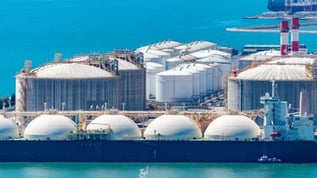
- Offloading and LNG: telemetry for FPSO tanker offloading and for LNG floating storage and regasification units (FSRU).
- Pipeline integrity monitoring: leak detection and flow monitoring for safe, efficient operation.
- Data server: a central data repository, with historical data retention and easy retrieval.
Technical specifications
| Hardware | Shallow-depth 1U rackmount industrial computer |
|---|---|
| Operating systems | GNU/Linux and MS-Windows |
| Data formats | Modbus (ASCII/RTU/TCP), OPC, FTP, SMTP, SNMP and Serial ASCII |
| RUPDB protocols | Telemetry transfer with stream framing (RS232/RS422/RS485 and TCP) and packet framing |
| Update rate | 1 Hz, with sub-second node-to-node propagation over suitable communications |
| Historic database | All relevant pipeline data logged at 1 Hz, typically held for five years; no routine system management |
| History recovery | Up to 72 hours of missing data recovered automatically from neighbouring nodes after a link outage |
| Event logging | Sequence of events log with millisecond timestamp resolution |
| Reliability | Restarts automatically after a power failure and returns to the application; controlled shutdown from the interface |
Operation
Designed to keep running
The PTS interface is designed for efficient diagnostics and data visualisation. Most functions, including display navigation, work with a standard mouse, so it can be used without extensive technical training. Graphing and reporting tools help operators analyse pipeline events.
Automatic restart
After a power failure the system restarts and returns to the application software, with no manual intervention.
History recovery
When a link comes back after an outage, the PTS works out what data is missing and recovers it from neighbouring nodes. Recovery runs on lower-priority channels, so live data is never held up.
Controlled shutdown
A shutdown button on the interface supports controlled shutdowns, for system durability and safety.
Where to next
The Pipeline Telemetry System sits in Position and Mooring Monitoring, one of six monitoring areas WISE Group delivers.
In this area: RUP Excursion Monitoring System · Tanker Berthing Aid System
Related systems: Life Extension Monitoring System · Structural Health Monitoring · MetOcean and weather monitoring
Also useful: RUPDB SCADA software · Sensors and instruments · Service and support
Useful to include
- The pipeline or remote site, and how data reaches the control centre
- The instruments and protocols already in place
- Whether leak detection (PLIS) is part of the scope
What happens next
We confirm the data points, protocols and communications.
We define the hardware, the RUPDB setup and any PLIS configuration.
You get a scope for supply, installation and service.
Get in touch
Tell us about the pipeline and the data you need from it, and we will come back on how a PTS would be set up.
You can also contact us directly.